

How BYD’s Vertical Integration Is Reshaping Global Auto Operations
News originally published by
EIN Presswire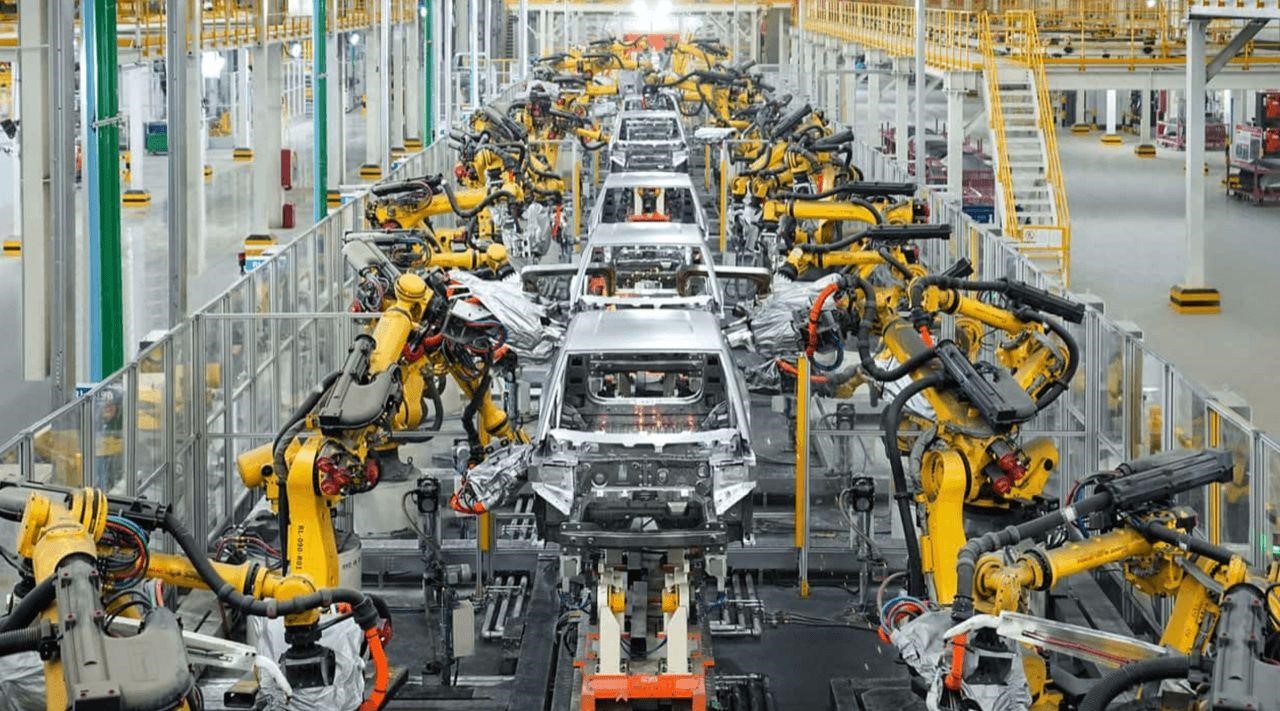
Production Image 1

George Monray
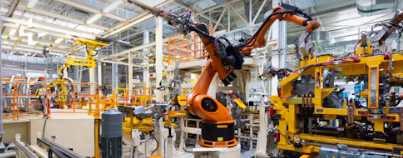
Image 2 production
How BYD’s Vertical Integration Is Reshaping Global Auto Operations according to Prof.George Monray
HOUSTON, TX, UNITED STATES, November 27, 2026 /EINPresswire.com/ -- Understanding BYD’s Competitive Edge and China’s new leadership in the global automotive industry
Today, we are speaking with Dr. George Monray, researcher at the American College of the Mediterranean and the Institute for American Universities (IAU), about his paper document published as a technical note Why BYD is winning?.
To begin, what led you to conduct this case study on BYD’s business model and competitive capabilities?
G. Monray: The study focuses on evaluating BYD's business model, technological capabilities, cost advantages, and international strategy. A major catalyst was the milestone reached in 2025, when BYD surpassed Tesla in both annual revenue and electric-vehicle sales. It marked a critical turning point in the global automotive landscape.
When comparing BYD and Tesla, many analysts look strictly at headline delivery numbers. How should we interpret those figures?
G. Monray: It is crucial to maintain analytical precision. When evaluating total New Energy Vehicle (NEV) sales, analysts must account for a fundamental product difference: BYD’s total sales figures include plug-in hybrid electric vehicles (PHEVs), whereas Tesla exclusively sells battery-electric vehicles (BEVs).
Recognizing that distinction is essential when comparing their overall sales volumes.
In your analysis, what emerges as the primary driver behind BYD’s market success?
G. Monray: Without question, the most important foundation of BYD's competitiveness is its unusually high degree of vertical integration. Traditional automotive manufacturers—including Volkswagen, Ford, and General Motors—generally purchase substantial portions of their vehicle components from external suppliers. Even Tesla, which many view as vertically integrated, still depends on extensive external supplier networks. BYD, by contrast, has pursued a fundamentally distinct structural strategy.
How extensive is BYD’s internal manufacturing? Which parts are they actually producing in-house?
G. Monray: BYD manufactures a significant proportion of its vehicle components internally. This includes:
• Batteries and battery management systems
• Electric motors
• Power electronics and semiconductor components
• Electronic control systems and vehicle displays
• Selected software and electronic modules
By producing these systems internally rather than purchasing them off the shelf, BYD achieves much tighter control over production costs, technological development, quality management, and supply-chain coordination.
Can this vertical integration advantage be quantified in terms of production depth and vehicle cost?
G. Monray: Yes. A 2026 industry analysis estimates that BYD produces roughly 80% of its Tier 1* components internally and approximately 36% of its Tier 2** components.
* Tier 1 components are complete systems or major assemblies delivered straight to automakers (OEMs). Common examples: Braking systems, powertrain assemblies, chassis systems, EV battery packs, cockpit domain controllers, and finished car seats.
**Tier 2 suppliers sit one step further back in the supply chain. They usually build parts to existing specs or provide specialized components that Tier 1 suppliers combine into finished modules. Common examples are automotive microchips and sensors, printed circuit boards (PCBs), wire harnesses, seat foam and cushions, gears, molded housings, and metal stampings.
In economic terms, that internal depth eliminates significant intermediate margins. A direct component analysis comparing the BYD Seal with the Tesla Model 3 estimated that BYD avoids approximately US$2,369 in supplier markups per vehicle. While these are analytical estimates rather than audited corporate savings, they clearly demonstrate how much capital traditional automakers leave on the table through third-party supplier markups.
Beyond eliminating supplier markups, what operational advantages does this provide against legacy automakers?
G. Monray: Under the traditional automotive model, manufacturers pay supplier hikes, rely on external delivery schedules, and have limited direct control over component engineering.
BYD’s model changes the entire dynamic:
1. Engineering synergy: BYD coordinates battery design and vehicle engineering simultaneously under one roof.
2. Platform responsiveness: Because they own the component development cycle, BYD can adapt components to vehicle platforms far more rapidly than competitors waiting on external supplier iterations.
3. Cost discipline: By controlling a larger share of the production pipeline, BYD reduces external supplier margins and lowers total production costs.
Ultimately, this structure generates higher responsiveness and structural cost savings that are very difficult for conventional OEMs to replicate quickly.
Finally, what are the implications of BYD's international expansion for US automakers outside the US?
G. Monray: Outside the United States—where tariffs do not protect automakers—BYD is leveraging its vertical integration and cost advantages to aggressively win market share in Europe, Latin America, and Southeast Asia. This expansion is putting direct pricing pressure on brands like Tesla and forcing legacy US automakers like Ford and General Motors to scale back or delay their overseas electric vehicle commitments.
Some key themes I noticed are as severe market share erosion in Emerging Markets. In regions such as Latin America (notably Brazil) and Southeast Asia (such as Thailand), BYD’s affordable entry-level models (like the Seagull and Dolphin) dominate EV sales, significantly squeezing Tesla and traditional US brands that lack competitive sub-$25,000 offerings.
Also, BYD is actively opening manufacturing plants in Hungary, Brazil, Thailand, and Turkey, enabling it to bypass EU and local trade barriers and produce vehicles closer to overseas consumer hubs, Evading Global Tariffs via Localized Assembly. Consequently, we see a margin compression for Tesla due that in markets like Europe and Australia, BYD is competing directly against Tesla's Model 3 and Model Y with aggressive pricing and newer sub-brands, forcing continuous price adjustments that compress Tesla's international operating margins.
US Automakers are actually facing severe cost disadvantages from external supplier dependency, companies like Ford and GM have slowed their EV rollouts in international markets or pivoted back toward gas and hybrid platforms to avoid unprofitable EV price wars abroad.
The coming years will be crucial in determining how US automakers respond.
George Monray is professor of Microeconomics and Operations Management at the American College of the Mediterranean and the Institute for American Universities. Access to the full document https://doi.org/10.5281/zenodo.24574713
George Monray
GM
+34 633 93 48 45
Visit us on social media:
LinkedIn
Legal Disclaimer:
EIN Presswire provides this news content "as is" without warranty of any kind. We do not accept any responsibility or liability for the accuracy, content, images, videos, licenses, completeness, legality, or reliability of the information contained in this article. If you have any complaints or copyright issues related to this article, kindly contact the author above.
