
Green Manufacturing in Injection Molding: Carbon-Reduction Strategies for EU/US Supply Chains
News originally published by
EIN Presswire
HONG KONG, HONG KONG, HONG KONG, November 26, 2026 /EINPresswire.com/ -- Lowering upstream Scope 3 emissions in European and North American polymer supply chains requires evaluating how a plastic molding supplier controls certified feedstock traceability and cavity output per kilowatt-hour. Shop-floor runner-scrap elimination also shapes the carbon footprint of every shipped lot. Procurement and sustainability teams achieve verifiable carbon reductions when mass-balance bio-attributed resins, post-consumer recycled (PCR) polymers, high-cavitation tooling, and digital energy management operate inside one manufacturing system.
Why Scope 3 Emissions in Polymer Processing Begin with Tooling and Cycle Efficiency
For medical, infant-care, packaging, and automotive brand owners in the European Union and the United States, purchased polymer components account for a large share of corporate Scope 3 greenhouse-gas inventories. Practical carbon-reduction strategies start at the mold-engineering and process-setup stage. Part wall thickness, runner volume, cooling-channel geometry, and first-pass yield determine both raw-material consumption and electric press power per thousand shipped parts. Tooling geometry directly governs per-part energy use.
Every gram of vulcanized runner waste or rejected off-spec plastic carries the embodied carbon of resin polymerization plus the electricity consumed by barrel heaters, clamp actuators, and chillers. Cutting a molding cycle from 18 seconds to 10 seconds with conformal cooling or scaling a tool from 16 cavities to 64 or 128 cavities lowers kilowatt-hours per piece. High cavitation cuts machine energy across multi-million-unit annual supply agreements. Modular mold bases with interchangeable inserts also extend tool service life and reduce steel replacement emissions over multi-year programs.
Material-Level Decarbonization: ISCC PLUS Mass Balance, PCR Resins, and Multi-Component Design
Certified Mass-Balance Feedstocks and Thick-Wall Post-Consumer Recycled Processing
Replacing fossil-derived virgin resins with bio-attributed or circular polymers requires auditable chain-of-custody records from resin intake through finished-part shipment. Operating under ISCC PLUS certification alongside FDA registration, Hongrita runs non-stop, fully automated BPA-free workshops. These production lines use 10-to-470-ton injection molding machines, injection stretch blow molding (ISBM) equipment, and plastic extrusion systems to produce over 100 million drinking bottles and health-life components each year.
Material-level decarbonization also combines structural thin-walling with recycled-polymer processing in packaging and industrial applications. Using scientific plastic injection molding parameters and interchangeable multi-cavity tooling, Hongrita molds thin-wall packaging down to 0.3 by 175 millimeters to reduce polymer mass per unit. In addition, specialized screw and gating profiles process post-consumer recycled (PCR) resins in thick-wall geometries up to 13 millimeters without losing dimensional stability. Physical-and-chemical laboratory testing verifies incoming PCR melt-flow stability before production runs begin.
Replacing Secondary Adhesives and Assembly Lines with Multi-Material Molding
Consolidating two or three separate parts into a single multi-component or in-mold-assembled cycle removes the electricity, floor space, and solvent emissions of secondary gluing, ultrasonic welding, and sub-assembly lines. When rigid substrates and soft seals bond directly inside a rotating stack mold, index-plate tool, or rotary turntable cell, parts leave the press as finished assemblies. This single-step molding reduces work-in-process transport and eliminates intermediate packaging trays.
Proprietary processes such as In-mold Welding on 1+1+1-cavitation Tritan insulated cups with a 45-second cycle eliminate secondary thermal bonding steps. Similarly, in-house valve cold-runner LSR molding on 64-cavity automotive harness plugs with a 20-second cycle cuts elastomer waste at the source. Keeping liquid silicone uncured inside chilled manifold channels eliminates vulcanized runner scrap, while multi-component overmolding lowers long-run energy and material intensity across the product lifecycle. Self-developed turntables and side-injection units also allow standard single-shot presses to run two-shot and three-shot jobs without energy-heavy secondary machinery.
Smart Factory Energy Management, High-Cavitation Tooling, and Scrap Reduction
Operating a green and low-carbon factory requires linking precision toolmaking with digital shop-floor monitoring so process drift is corrected before defective batches waste resin and power. Founded in Hong Kong in 1988, Hongrita initiated an enterprise-wide digital and ESG upgrading strategy in 2018 to build a Green Intelligent Manufacturing Factory across its smart plastic molding operations. These upgrades earned the New Industrialization Excellence Award Gold Award, the ROI-EFESO and Industrie 4.0 China Award 2024 Smart Factory title, and Zhongshan Digital and Smart Manufacturing Model Factory recognition.
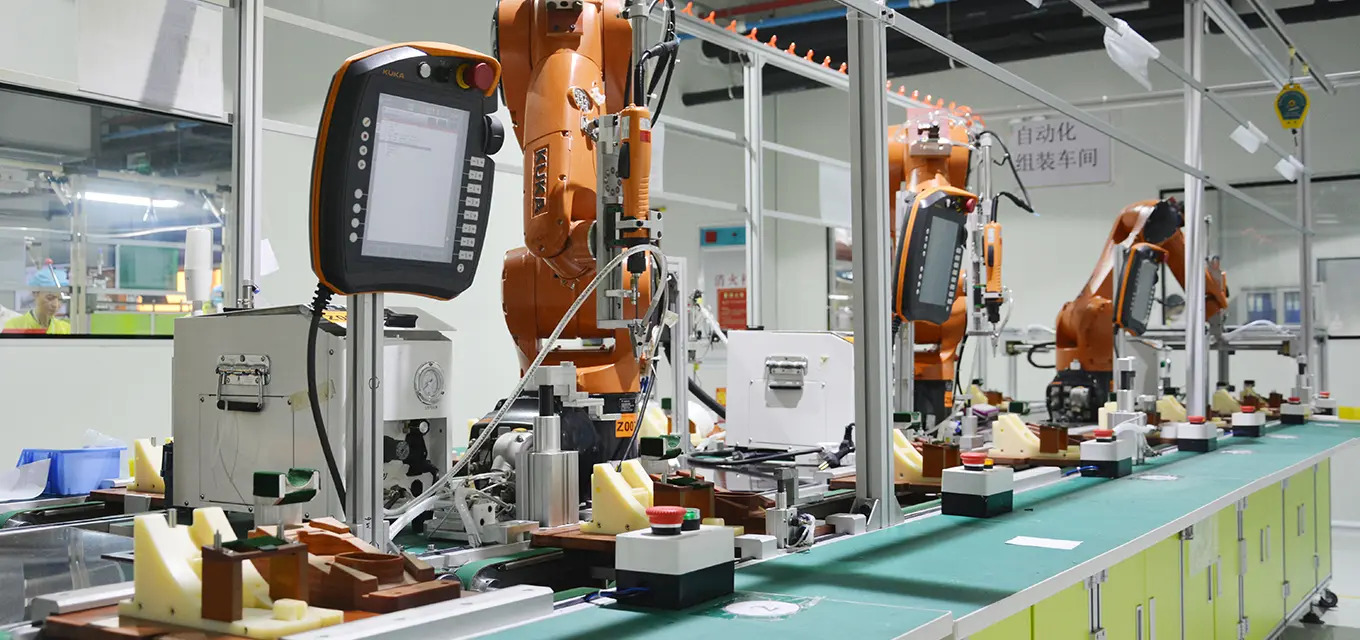
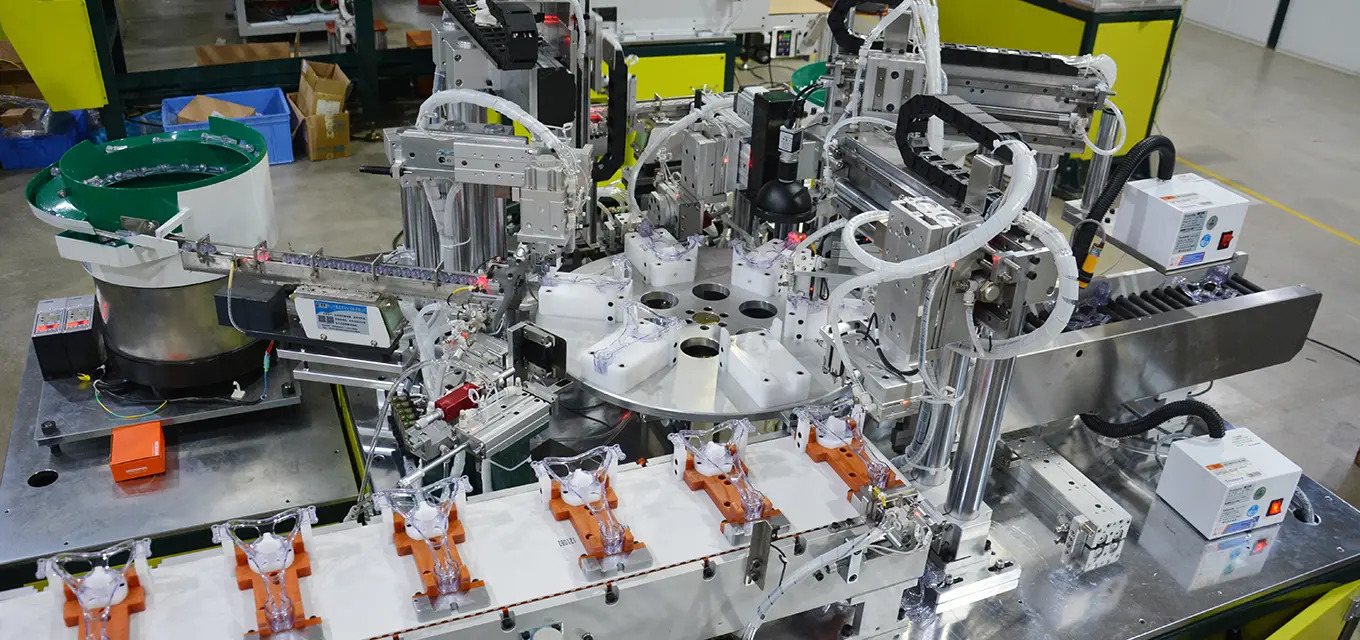
Inside the precision injection molding workshop, integrated production cells combine patented molds, customized molding machines, self-developed turntables, vision detection cameras, and digital management software. This closed-loop automation shortens cycle times and prevents off-spec scrap. High-cavitation tooling such as 64-cavity syringe push-rod molds with a 9-second cycle and 128-cavity pump-valve molds with a 10-second cycle maximizes output per press hour. Seven in-house laboratories, including optical measurement, reliability testing, and environmental testing, verify batch quality before mass release.
These energy-saving and carbon-reduction projects have earned external environmental recognitions. Major honors include the 2021-22 Hong Kong Awards for Environmental Excellence Manufacturing and Industrial Services Merit Award and the 2021 BOC Hong Kong Corporate Environmental Leadership Awards Environmental Excellence recognition. Technical exchanges with global buyers at industry events such as DMC 2026 in Shanghai further connect high-precision tooling design with low-carbon automated production.
Environmental Management Systems and Governance Standards That EU and US Buyers Audit
European and North American supplier audits require documented management systems that connect carbon and waste targets with quality, workplace safety, and data governance. Hongrita holds certified ISO 14001 environmental management, ISO 9001, IATF 16949, ISO 13485, ISO 45001 occupational health and safety, and ISO/IEC 27001 information security systems. Hongrita also achieved Customs AEO Advanced Certified Enterprise status in 2023.
This compliance framework is backed by formal governance policies published on Hongrita's ESG portal. Published documents include its Social Responsibility Policy (September 18, 2017), Environmental Policy (September 3, 2021), Information Security Policy (September 15, 2022), and Occupational Health and Safety Policy (June 30, 2023). Auditable ISO 14001 records and ISCC PLUS mass-balance certificates give EU and US procurement teams concrete documentation for annual ESG and Scope 3 reporting.
Aligning Carbon-Reduction Roadmaps with Multi-Site Production in Asia
Supply-chain resilience and transport carbon efficiency improve when OEMs can assign tooling engineering, component plastic molding, and regional fulfillment across specialized Asian plants. Operating six physical plants with roughly 2,500 team members across three regional bases, Hongrita directs R&D and digital-factory engineering from Zhongshan. The Shenzhen plants handle 3C parts and commercial export moldmaking, while the Penang, Malaysia facilities support Southeast Asian molding and assembly.
During RFQ scoping for new plastic molding programs, EU and US engineering teams can evaluate how high-cavitation molds, valve cold-runner LSR tooling, and PCR or ISCC PLUS certified resins apply to their parts. Multi-component consolidation further reduces secondary assembly energy. Matching the right tooling and material architecture to annual demand lowers both unit piece cost and embodied carbon per delivered component.
To evaluate low-carbon tooling, ISCC PLUS mass-balance production, or multi-material consolidation with Hongrita for your EU or US supply chain, contact Hongrita team. Explore ESG policies, certifications, and manufacturing capabilities at https://www.hongrita.com/.
Hongrita
Hongrita
Legal Disclaimer:
EIN Presswire provides this news content "as is" without warranty of any kind. We do not accept any responsibility or liability for the accuracy, content, images, videos, licenses, completeness, legality, or reliability of the information contained in this article. If you have any complaints or copyright issues related to this article, kindly contact the author above.

