

Subsea Thermal Insulation Materials Market Size to Hit USD 501.86 million by 2036 ; Aspen Aerogels, Cabot, BASF Dominate
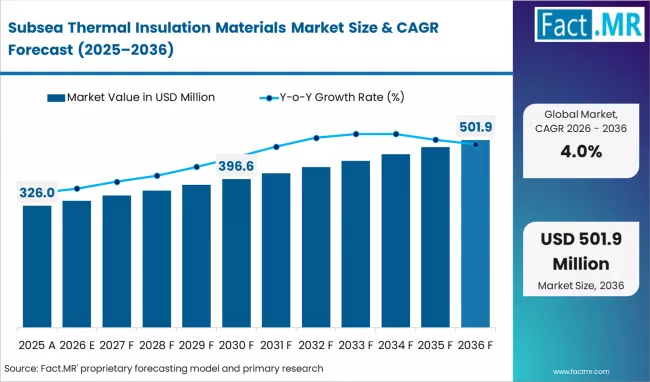
Subsea Thermal Insulation Materials Market is segmented by Type, Application, and Region. Forecast for 2026 to 2036
ROCKVILLE, MD, UNITED STATES, April 8, 2026 /EINPresswire.com/ -- According to Fact.MR’s latest analysis, the global subsea thermal insulation materials market is valued at USD 326.0 million in 2025 and is projected to reach approximately USD 350–360 million in 2026, further expanding to USD 482.0 million by 2035, registering a CAGR of 4.0% during the forecast period. The market is set to generate an incremental opportunity of USD 156.0 million over the next decade.𝗚𝗲𝘁 𝗗𝗲𝘁𝗮𝗶𝗹𝗲𝗱 𝗠𝗮𝗿𝗸𝗲𝘁 𝗙𝗼𝗿𝗲𝗰𝗮𝘀𝘁𝘀, 𝗖𝗼𝗺𝗽𝗲𝘁𝗶𝘁𝗶𝘃𝗲 𝗕𝗲𝗻𝗰𝗵𝗺𝗮𝗿𝗸𝗶𝗻𝗴, 𝗮𝗻𝗱 𝗣𝗿𝗶𝗰𝗶𝗻𝗴 𝗧𝗿𝗲𝗻𝗱𝘀: https://www.factmr.com/connectus/sample?flag=S&rep_id=11889
The market is undergoing a structural shift as subsea insulation transitions from a supporting component to a mission-critical flow assurance technology. Operators are increasingly deploying advanced insulation systems to prevent hydrate formation, maintain temperature stability, and enhance offshore production efficiency.
Quick Stats:
• Market Size (2025): USD 326.0 Million
• Market Size (2026): ~USD 355.0 Million (est.)
• Forecast Value (2035): USD 482.0 Million
• CAGR (2025–2035): 4.0%
• Incremental Opportunity: USD 156.0 Million
• Leading Segment: Polyurethane (42.5% share)
• Leading Application: Pipe-in-Pipe Systems (53.0% share)
• Leading Region: Europe (Norway, UK)
• Key Players: Trelleborg AB, TechnipFMC plc, BASF SE, Cabot Corporation, Aspen Aerogels
Executive Insight for Decision Makers
The subsea insulation market is evolving into a performance-critical engineering domain.
• Strategic Shift:
Procurement decisions are now driven by thermal efficiency, reliability, and lifecycle performance, not just material cost.
• What Stakeholders Must Do:
o Oil & gas operators must integrate insulation early in field development planning
o Manufacturers should focus on high-performance and lightweight materials
o Investors should prioritize companies with deepwater and Arctic project exposure
• Risk of Inaction:
Failure to adopt advanced insulation systems can result in flow assurance failures, hydrate blockages, and costly production shutdowns.
Market Dynamics
Key Growth Drivers
• Expansion of deepwater and ultra-deepwater exploration projects
• Increasing demand for flow assurance and hydrate prevention systems
• Growth in subsea pipeline infrastructure development
• Rising investments in Arctic and harsh environment offshore projects
Key Restraints
• High cost of advanced insulation materials (e.g., aerogels)
• Complex installation under extreme subsea conditions
• Concerns over long-term durability and performance degradation
Emerging Trends
• Adoption of aerogel-based ultra-low thermal conductivity materials
• Integration of smart monitoring and performance validation systems
• Development of lightweight, high-strength insulation materials
• Increased focus on customized insulation solutions for deepwater fields
Segment Analysis
• Leading Segment:
o Polyurethane dominates with 42.5% share, offering optimal balance between performance and cost
• Fastest-Growing Segment:
o Aerogels, driven by demand for extreme thermal performance
• Application Breakdown:
o Pipe-in-Pipe – 53.0%
o Pipe Cover – 18.0%
o Equipment – 12.0%
o Field Joints – 10.0%
• Strategic Importance:
Pipe-in-pipe systems are critical for deepwater flow assurance, making them the core demand driver.
Supply Chain Analysis (Critical Insight)
The subsea insulation market operates through a specialized, project-driven supply chain:
• Raw Material Suppliers:
Polymer producers (polyurethane, polypropylene), specialty material providers (aerogels)
• Manufacturers / Solution Providers:
Companies developing insulation systems and coatings
• Engineering & Installation Providers:
Offshore service firms integrating insulation into subsea infrastructure
• Distributors / EPC Contractors:
Engineering, procurement, and construction firms managing offshore projects
• End-Users:
o Oil & gas operators → subsea pipelines, flowlines, risers
o Offshore developers → deepwater and Arctic projects
Who supplies whom:
Material suppliers → insulation manufacturers → EPC contractors → offshore operators → deployed in subsea fields.
A key constraint exists in installation expertise, where project complexity limits scalability.
Pricing Trends
• Pricing Model:
Premium, project-based pricing rather than commoditized volume sales
• Key Influencing Factors:
o Material type (aerogel vs polyurethane)
o Water depth and environmental conditions
o Project scale and customization requirements
o Certification and performance validation standards
• Margin Insights:
o Higher margins in deepwater and harsh environment projects
o Lower margins in standard shallow-water applications
Regional Analysis
Top Countries by CAGR (2025–2035)
• Angola – 5.0%
• Russia – 4.6%
• Norway – 4.5%
• China – 4.1%
• Brazil – 3.9%
Regional Growth Insights
• Europe (Leader):
Driven by North Sea and Arctic offshore investments, especially Norway and the UK
• Africa & Latin America:
Growth fueled by deepwater oil projects in Angola and Brazil
• Asia Pacific:
Expansion in China’s offshore energy sector
• North America:
Mature market with steady demand from Gulf of Mexico projects
Developed vs Emerging Markets
• Developed Markets:
Focus on maintenance, upgrades, and efficiency optimization
• Emerging Markets:
Driven by new offshore field development and infrastructure expansion
Competitive Landscape
• Market Structure: Moderately concentrated with strong presence of specialized players
Key Players
• Trelleborg AB
• TechnipFMC plc
• BASF SE
• Cabot Corporation
• Aspen Aerogels, Inc.
• Advanced Insulation plc
• Shawcor Ltd.
• Armacell International S.A.
• Balmoral Group Ltd.
• Benarx Solutions AS
Competitive Strategies
• Development of advanced insulation materials
• Strategic partnerships with offshore operators and EPC firms
• Focus on thermal performance validation and certification
• Expansion into deepwater and Arctic projects
Strategic Takeaways
For Manufacturers
• Invest in advanced material innovation (aerogels, composites)
• Build capabilities in customized offshore solutions
For Investors
• Focus on companies with exposure to deepwater exploration growth markets
• Target firms with strong EPC and operator partnerships
For Distributors / Contractors
• Strengthen expertise in installation and project execution
• Align with offshore project pipelines
Why This Market Matters
Subsea thermal insulation materials are essential for ensuring uninterrupted offshore energy production. As deepwater exploration intensifies and environmental conditions become more challenging, these materials are no longer optional—they are critical enablers of energy security, operational efficiency, and offshore innovation.
𝗨𝗻𝗹𝗼𝗰𝗸 𝟯𝟲𝟬° 𝗜𝗻𝘀𝗶𝗴𝗵𝘁𝘀 𝗳𝗼𝗿 𝗦𝘁𝗿𝗮𝘁𝗲𝗴𝗶𝗰 𝗗𝗲𝗰𝗶𝘀𝗶𝗼𝗻 𝗠𝗮𝗸𝗶𝗻𝗴 𝗮𝗻𝗱 𝗜𝗻𝘃𝗲𝘀𝘁𝗺𝗲𝗻𝘁 𝗣𝗹𝗮𝗻𝗻𝗶𝗻𝗴 : https://www.factmr.com/checkout/11889
Related Reports:
Thermal Conductive Sheet Market: https://www.factmr.com/report/thermal-conductive-sheet-market
Thermal Ceramics Market: https://www.factmr.com/report/thermal-ceramics-market
Thermal Conductive Adhesives Market: https://www.factmr.com/report/4610/thermal-conductive-adhesives-market
Thermal Mass Concrete Additives Market: https://www.factmr.com/report/thermal-mass-concrete-additives-market
S. N. Jha
Fact.MR
+1 628-251-1583
email us here
Legal Disclaimer:
EIN Presswire provides this news content "as is" without warranty of any kind. We do not accept any responsibility or liability for the accuracy, content, images, videos, licenses, completeness, legality, or reliability of the information contained in this article. If you have any complaints or copyright issues related to this article, kindly contact the author above.
